Skip to content


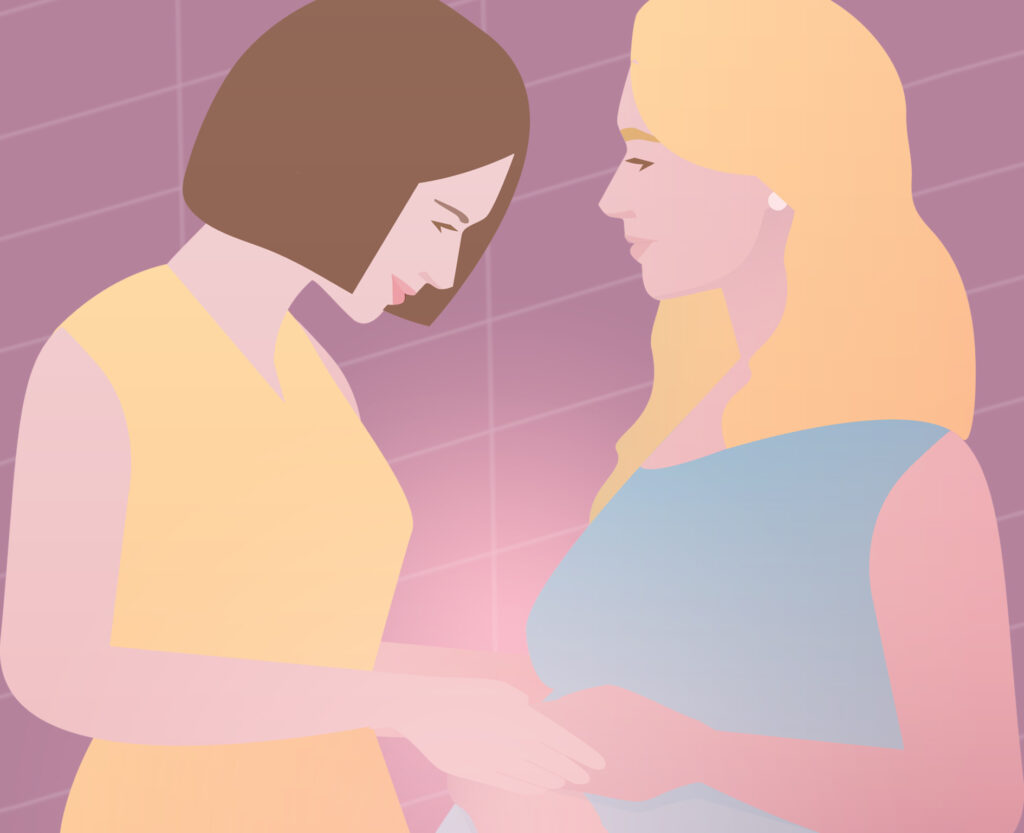
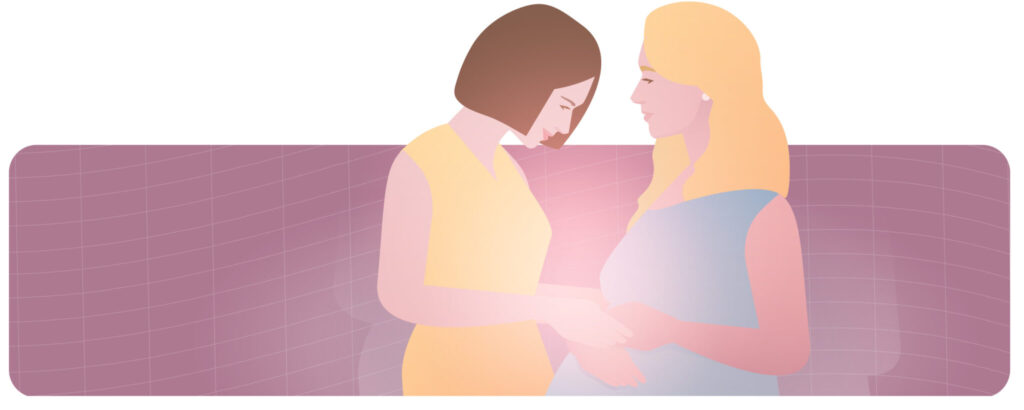
More and more female couples are looking for clear information about the ROPA method, especially when they are considering becoming mothers while sharing the pregnancy journey. One of the most common questions is what the ROPA method in IVF actually is and how pregnancy works with this technique.
In this article we explain, in a simple and evidence-based way, what is the ROPA method in IVF, who it is for, what the step-by-step process looks like, and which medical and legal aspects you should consider before starting treatment.
What is the ROPA method?
The ROPA method (Reception of Oocytes from the Partner) is an assisted reproduction technique based on in vitro fertilisation (IVF) that allows both women in a couple to take an active role in achieving pregnancy.
In this type of treatment:
- One woman provides the eggs (genetic mother).
- The other woman carries the pregnancy (gestational mother).
That is why, when we talk about the ROPA method and pregnancy, it is not only about becoming pregnant, but also about sharing motherhood from both a biological and emotional perspective.
The ROPA method is also widely used and endorsed by scientific societies specialising in human reproduction, such as the Spanish Fertility Society.
ROPA method: pregnancy and the involvement of both women
One of the main reasons many couples are interested in the ROPA method is that both women play an active role in the reproductive process.
Unlike other treatments, there is no single “main” protagonist here:
one contributes the genetic component and the other carries the pregnancy, creating a very special bond from the very start.
Who is the ROPA method recommended for?
The ROPA method is especially recommended for:
- Female couples who wish to experience shared motherhood.
- Situations where one woman has a good ovarian reserve but cannot carry a pregnancy.
- Situations where one woman can carry a pregnancy but cannot provide eggs.
It is also an option chosen by couples who, even if both can carry a pregnancy, want to share roles for personal or medical reasons.
In any case, the ROPA method is only one of the assisted reproduction options available for female couples who want to become mothers. There are other pathways that may suit each individual and medical situation better, so it is important to understand all possibilities before making a decision.
If you’d like to explore this topic further, in this article we explain what options female couples have when they want to become mothers and when each option is recommended.
ROPA method: step-by-step IVF pregnancy process
To properly understand what is the ROPA method in IVF and how pregnancy is achieved, it helps to know the key stages.
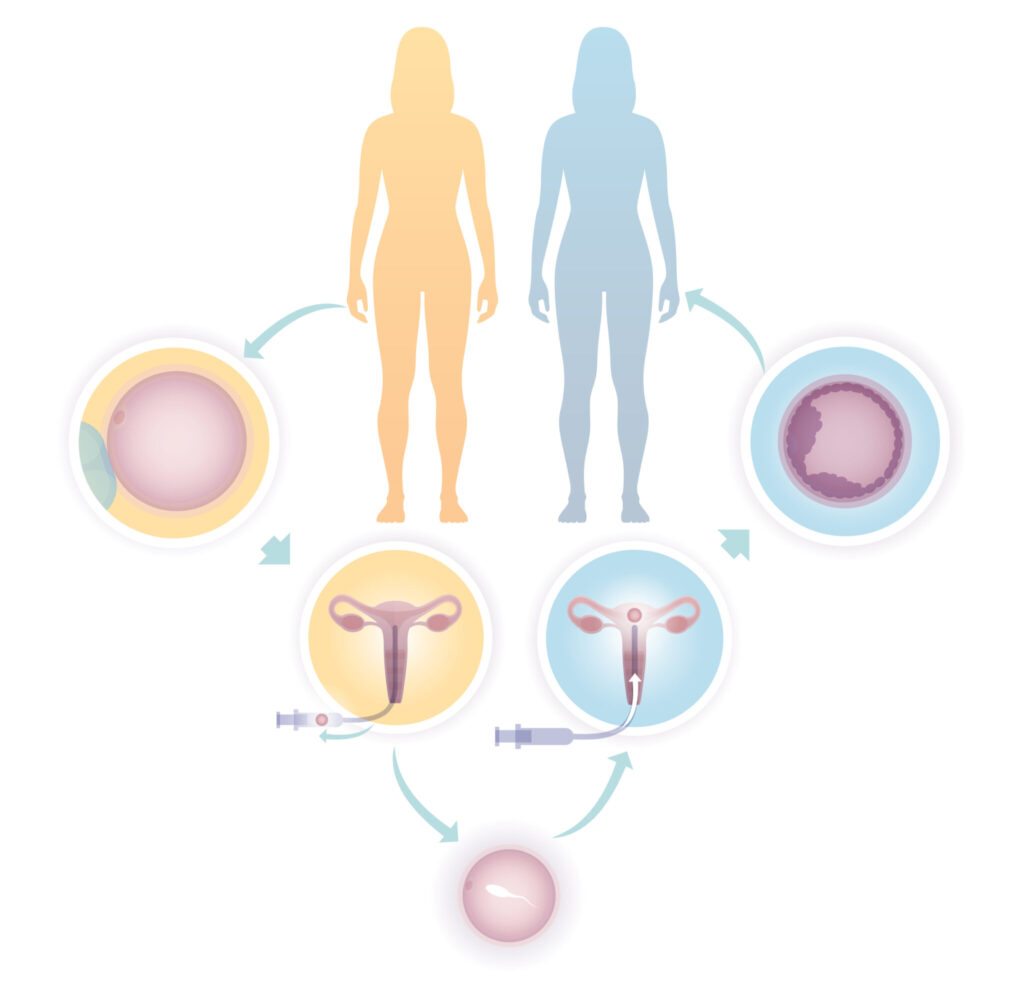
Initial medical assessment
Before starting, both women undergo a full assessment which includes:
- Hormone blood tests
- Gynaecological ultrasound scan
- Infection screening tests
- Assessment of the uterus and ovarian reserve
This assessment helps decide which partner will provide the eggs and which partner will carry the pregnancy.
Ovarian stimulation and egg collection
The woman providing the eggs follows a controlled ovarian stimulation protocol to obtain several eggs in the same cycle.
Once mature, the eggs are collected via an egg retrieval (ovarian puncture), a straightforward and safe procedure.
Fertilisation and embryo development
The eggs are fertilised in the laboratory using donor sperm from an authorised sperm bank.
The resulting embryos are cultured for several days to select those with the best quality.
Uterine preparation and embryo transfer
Meanwhile, the woman who will carry the pregnancy follows hormonal treatment to prepare the endometrium.
When the uterus is ready, an embryo transfer is performed — a painless procedure that marks the beginning of a pregnancy via the ROPA method.
What are the chances of pregnancy with the ROPA method?
Success rates with the ROPA method are similar to those of conventional IVF and mainly depend on:
- The age of the woman providing the eggs
- Embryo quality
- The health of the uterus of the gestational mother
In younger couples who have been properly assessed, the chances of pregnancy are high and comparable to other treatments using a woman’s own eggs.
How is the sperm donor selected in the ROPA method?
One of the most common questions about the ROPA method is whether the sperm donor is matched to the gestational mother’s physical traits, especially considering that the embryo’s genetic material comes from the woman providing the eggs.
The answer is yes, as far as possible.
In assisted reproduction treatments, sperm donor selection is carried out taking into account the phenotype of the woman who will carry the pregnancy — for example, characteristics such as skin tone, eye colour, hair colour, build, or blood group.
Although the main genetic material of the embryo comes from the egg and the sperm cell, the purpose of this matching is to ensure phenotypic consistency within the family, so the future baby may resemble both the genetic mother and the gestational mother.
In addition, in the ROPA method, the woman who carries the pregnancy can also influence embryonic development through the uterine environment — an area of study known as epigenetics, which explores how the uterine environment can modulate gene expression during pregnancy.
Therefore, even though the genetic mother provides the egg’s genetic information, donor matching and the gestational mother’s role make the process “shared” from a biological perspective too.
Advantages of the ROPA method
The main advantages of the ROPA method include:
- Active involvement of both women
- Shared genetic and gestational connection
- A safe, well-established treatment
- A clear legal framework in Spain
For many couples, the emotional value of the ROPA method is just as important as the medical outcome.
Conclusion: the ROPA method and shared motherhood
In summary, if you’re asking what is the ROPA method in IVF?, the answer is simple:
it is an assisted reproduction treatment that allows two women to share motherhood — one providing the eggs and the other carrying the pregnancy.
It is a real, safe and well-established option that offers many couples the possibility of experiencing motherhood together, in a planned way and supported by specialised professionals.